





Chhattisgarh, a vibrant state in central India, is known for its rich cultural heritage and deep-rooted traditions. Among its many cultural treasures, the traditional attire of Chhattisgarh stands out for its beauty, simplicity, and significance.
Both tribal and non-tribal communities in the state wear clothing that reflects their history, lifestyle, and the environment around them. T
he traditional garments, such as the Pata saree, Kosa silk saree, and Pichhori, represent centuries-old customs passed down through generations.
These handwoven clothes, made from natural fabrics and dyes, highlight the craftsmanship of local artisans.
This guide explores the top 10 traditional dresses of Chhattisgarh, providing an insightful look into how these garments not only serve practical purposes but also celebrate the region’s cultural identity.
What is the significance of traditional clothing in Chhattisgarh’s culture?

Traditional clothing in Chhattisgarh is deeply intertwined with the state’s cultural identity, particularly in tribal communities. The attire reflects the region’s climate, lifestyle, and social customs.
For example, the Pata saree with its simple design symbolizes the purity and modesty of women, while the Kosa silk garments reflect the artistry and heritage of local weavers.
These garments are often worn during festivals, weddings, and other important life events, acting as markers of social status and cultural pride.
Chhattisgarh’s handloom tradition, passed down through generations, plays a vital role in preserving this heritage and keeping the state’s cultural history alive in a rapidly modernising world.
How Are Chhattisgarh’s Traditional Garments Made?
The traditional garments of Chhattisgarh are predominantly handwoven using natural materials like cotton and silk.
Kosa silk, produced by the Dewangan tribe from the Champa region, is highly valued for its fine texture and durability.
Artisans employ age-old techniques passed down through generations, weaving intricate patterns and motifs inspired by nature.
Natural dyes are used, often extracted from plants, to give fabrics their rich colors. The labor-intensive process requires great skill, and the garments are often made on traditional handlooms.
Each district in Chhattisgarh may have its own unique weaving style, making these garments a testament to the state’s diverse textile heritage.
How Does the Climate Influence the Clothing Choices in Chhattisgarh?
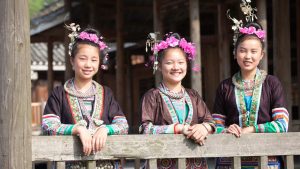
Chhattisgarh’s hot and humid climate significantly influences the choice of traditional clothing, with light, breathable fabrics like cotton being the primary choice for everyday wear.
Dhoti, Lugda, and Pichhori are typically made from cotton, allowing for better air circulation and comfort in the region’s warm weather.
For formal occasions or during cooler months, heavier fabrics like Kosa silk are preferred, as they provide warmth and a luxurious feel.
The practicality of the drapes and the natural fibers used ensures that the attire is both functional and suited to the region’s varying temperatures throughout the year.
What Role Do Tribal Communities Play in Chhattisgarh’s Clothing Traditions?
Tribal communities in Chhattisgarh, such as those in Bastar and Kanker, play a significant role in the state’s clothing traditions.
Their attire, like the Chendra saree and Pata saree, reflects a connection to nature and simplicity. These communities are known for their handloom weaving and natural dyeing techniques, which have been passed down through generations.
Clothing is often adorned with tribal motifs, including designs inspired by flora and fauna. These garments are more than just clothing; they symbolise the community’s identity and their relationship with the environment.
Festivals and religious ceremonies showcase the vibrancy of these traditions, ensuring that tribal clothing remains a strong cultural symbol.
How Are Traditional Garments of Chhattisgarh Evolving in Modern Times?
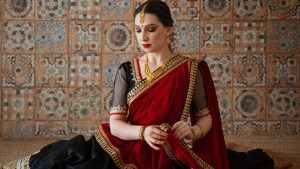
While traditional garments in Chhattisgarh maintain their cultural roots, they are also evolving to keep pace with modern fashion.
Designers are incorporating elements of Kosa silk and tribal motifs into contemporary styles, making these fabrics more accessible to a broader audience.
Kachhora sarees and Kosa silk kurtas are being adapted with modern cuts, lighter fabrics, and fusion designs, appealing to younger generations.
However, even with these modern updates, the essence of tradition is preserved, ensuring that the cultural significance of these garments is not lost.
This blending of old and new helps keep Chhattisgarh’s handloom heritage alive while promoting it in the global fashion industry.
What Are the Unique Features of Chhattisgarh’s Traditional Garments?
Chhattisgarh’s traditional garments are unique in their simplicity, practicality, and rich symbolism. The Pata saree is distinct with its aal border, while the Kosa silk saree is renowned for its natural golden-brown hue and luxurious texture.
Men’s attire, such as the Dhoti and Pichhori, is known for its comfort and ease of movement, making it suitable for the region’s rural and tribal lifestyle.
Natural dyes and handwoven fabrics are hallmarks of Chhattisgarh’s clothing, and motifs often reflect tribal artistry and nature.
These features highlight the region’s deep connection to its environment and cultural history, making the attire a unique representation of the state’s identity.
Top 10 Traditional Dress of Chhattisgarh
1. Pata Saree

Image – Source
The Pata saree is a traditional garment worn by the women of Chhattisgarh, particularly from tribal communities.
Characterised by its simple yet elegant appearance, it is typically white with a distinctive aal border in maroon or red.
The fabric is handwoven, often using local looms, giving it a rustic and organic texture.
The Pata saree can be draped in two popular styles, one being Ganthi Marna, where the saree is tied with a knot at the waist, and the other being the Chendra style, ideal for daily chores.
This saree is primarily worn by women during festivals and cultural celebrations, symbolising simplicity and tradition.
The Pata saree remains a significant part of the state’s cultural identity, often passed down through generations and worn during important occasions, showcasing the rich craftsmanship of the region.
Pata Saree Details
| Aspect | Description |
| Dress Name (Female) | Pata Saree |
| Cultural Symbolism | Represents the simplicity of tribal women and is worn during festivals and important occasions. |
| Fabric Type | Made from handwoven cotton with a deep red or maroon aal border. |
| Design Motifs | Minimalistic, with plain white and a simple border, often reflecting tribal art styles. |
| Wearing Style | Worn in the Ganthi Marna style (with a knot) or the Chendra style for practicality. |
| Occasions for Use | Festive wear, especially during local festivals like Teeja and Hareli. |
| Popular Accessories | Often paired with silver jewellery such as anklets and bangles. |
| Regional Variations | Worn differently across districts, with slight changes in colour and draping methods. |
| Artisan Crafting Techniques | Handwoven using local looms by artisans in rural Chhattisgarh. |
| Gender Differences | Worn by women only, men typically wear Dhoti-Kurta for festivals. |
| Historical Roots | The Pata saree has deep roots in tribal traditions, symbolising purity and modesty. |
| Seasonal Adaptations | Cotton variants are preferred during hot weather, while heavier fabrics may be worn in cooler months. |
| Cultural Significance | Passed down through generations, it represents the enduring cultural heritage of Chhattisgarh. |
| Modern Variations | Modern adaptations may include lighter fabrics with contemporary designs while still maintaining traditional aesthetics. |
| Handloom Heritage | Produced in the rural regions of Chhattisgarh, contributing to the state’s rich handloom industry. |
2. Kachhora Saree

Image – Source
The Kachhora saree is another popular traditional outfit for women in Chhattisgarh, and it is known for its distinct draping style.
Tribal women typically wear this saree and is famous for the kachhora drape, which involves pleating the saree and tucking it between the legs.
It allows freedom of movement, making daily tasks practical and comfortable. The fabric is handwoven, often adorned with tribal patterns, using natural dyes such as batik designs.
Traditionally, the Kachhora saree is worn during festivals and cultural gatherings. It reflects the simplicity and functionality of tribal life while retaining a sense of grace and beauty.
The saree is often passed down as a symbol of family heritage and culture, connecting generations.
Kachhora Saree Details
| Aspect | Description |
| Dress Name (Female) | Kachhora Saree |
| Cultural Symbolism | Reflects tribal women’s everyday lives, symbolising practicality and cultural heritage. |
| Fabric Type | Handwoven cotton, often dyed using batik or natural dyes. |
| Design Motifs | Geometric and nature-inspired motifs are common in tribal attire. |
| Wearing Style | Draped with the kachhora style, where the saree is pleated and tucked between the legs for ease of movement. |
| Occasions for Use | Often worn during daily chores, festivals, and cultural events. |
| Popular Accessories | Paired with Polkha (blouse) and minimal silver jewellery. |
| Regional Variations | Different districts may have variations in draping style and colour combinations. |
| Artisan Crafting Techniques | Handwoven by local artisans using traditional looms and natural dyes. |
| Gender Differences | Worn exclusively by women, men wear Pichhori or Dhoti. |
| Historical Roots | Deep roots in tribal customs, reflecting the lifestyle and culture of rural Chhattisgarh. |
| Seasonal Adaptations | Light cotton fabrics are used for summer, and heavier fabrics are used for winter months. |
| Cultural Significance | A significant part of tribal identity is passed down through generations. |
| Modern Variations | Contemporary designers are incorporating the kachhora drape into fusion fashion. |
| Handloom Heritage | Made using traditional methods, highlighting the rich handloom culture of Chhattisgarh. |
3. Chendra Saree

Image – Source
The Chendra saree is a traditional garment mainly worn by tribal women in the Bastar region of Chhattisgarh. This saree is known for its practicality, as it allows women to move freely during their daily activities.
The Chendra is draped in a manner that leaves the hands and legs unencumbered, making it ideal for household chores or working in the fields.
The design is typically simple, with muted colors and minimal adornments, reflecting the practical lifestyle of the community.
This saree holds cultural significance as it is worn daily by tribal women, symbolizing their connection to the land and community.
Unlike the more elaborate attire for festivals, the Chendra saree is straightforward and durable, emphasising utility and comfort over ornate design. Despite its simplicity, it remains a vital aspect of tribal identity.
Chendra Saree Details
| Aspect | Description |
| Dress Name (Female) | Chendra Saree |
| Cultural Symbolism | Symbolizes the everyday life of tribal women, focusing on practicality and comfort. |
| Fabric Type | Handwoven cotton, usually in simple patterns and muted colours. |
| Design Motifs | Minimalistic designs with few or no embellishments. |
| Wearing Style | Draped to allow freedom of movement, it is often worn without intricate pleating. |
| Occasions for Use | Daily wear, especially for household chores and working in the fields. |
| Popular Accessories | Usually paired with minimal jewellery, such as silver earrings or bangles. |
| Regional Variations | Variations in fabric and colours may occur depending on the district, but the drape remains functional. |
| Artisan Crafting Techniques | Handwoven by local artisans, often using simple looms and basic tools. |
| Gender Differences | It is exclusively worn by women, with men opting for dhotis or Eichhorn in similar settings. |
| Historical Roots | Rooted in tribal customs, reflecting the simplicity and practicality of rural life. |
| Seasonal Adaptations | Lighter fabrics are used in hot weather, with sturdier versions for colder climates. |
| Cultural Significance | Deeply connected to the cultural identity of the tribal communities in Bastar. |
| Modern Variations | Contemporary versions are rare, as the traditional drape is still widely preferred for its functionality. |
| Handloom Heritage | Woven on simple handlooms by local artisans in rural regions of Chhattisgarh. |
4. Lugda and Polkha
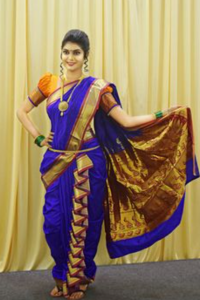
Image – Source
The Lugda and Polkha combination is a staple in the traditional wardrobe of Chhattisgarh women, particularly in rural areas. The Lugda is a handwoven saree, often paired with a Polkha, which is a short blouse.
The fabric is typically crafted on local looms using techniques passed down through generations, resulting in vibrant colors and intricate patterns that reflect local flora and fauna. This combination is worn both in daily life and during festive occasions.
The Lugda is draped in a simple style, with little to no pleating, emphasising ease and comfort. It is often adorned with traditional tribal motifs and natural dyes, adding to its aesthetic appeal.
The Polkha, usually made from cotton or silk, is designed to complement the saree and is often decorated with delicate embroidery.
Lugda and Polkha Details
| Aspect | Description |
| Dress Name (Female) | Lugda and Polkha |
| Cultural Symbolism | Symbolises the rural lifestyle and simplicity of women in Chhattisgarh. |
| Fabric Type | Handwoven cotton or silk, often dyed with natural colours. |
| Design Motifs | Tribal motifs depicting local flora and fauna are common. |
| Wearing Style | Draped simply with minimal pleating, emphasising comfort and practicality. |
| Occasions for Use | Worn in daily life as well as during festivals and celebrations. |
| Popular Accessories | Paired with traditional silver jewellery such as bangles and anklets. |
| Regional Variations | Districts may vary in terms of colour preferences and patterns, but the style remains consistent. |
| Artisan Crafting Techniques | Handwoven using traditional looms and dyed with natural dyes, often crafted by local artisans. |
| Gender Differences | Exclusively worn by women, men wear Dhoti-Kurta in similar settings. |
| Historical Roots | Part of rural traditions, symbolising the connection between people and the land. |
| Seasonal Adaptations | Cotton variants are for summer, and heavier versions are for colder months. |
| Cultural Significance | Represents the traditional attire of rural women in Chhattisgarh. |
| Modern Variations | Contemporary designers have modernised the Polkha with new fabrics and patterns. |
| Handloom Heritage | Produced in local handloom centres, contributing to the state’s textile heritage. |
5. Kosa Silk Saree
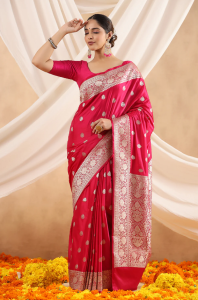
Image – Source
The Kosa Silk Saree is one of the most prized garments in Chhattisgarh, known for its luxurious texture and elegant appearance.
Made from Kosa silk, which is a variety of Tussar silk, this saree has a distinct natural golden-brown hue, giving it a royal and sophisticated look.
The fabric is handwoven in the Champa region and is highly sought after for both everyday use and special occasions, such as weddings and festivals.
The Kosa Silk Saree is known for its durability and softness, making it a popular choice for formal events. The intricate motifs, often inspired by nature, add to its beauty.
These sarees are traditionally worn by women and are often passed down as family heirlooms, reflecting the deep cultural roots of the Chhattisgarh region.
Kosa Silk Saree Details
| Aspect | Description |
| Dress Name (Female) | Kosa Silk Saree |
| Cultural Symbolism | It symbolises wealth and elegance and is often worn during weddings and formal occasions. |
| Fabric Type | Made from Kosa silk, a variant of Tussar silk, with a natural golden hue. |
| Design Motifs | Features nature-inspired motifs, such as flowers, trees, and traditional geometric patterns. |
| Wearing Style | Draped in traditional styles, often with pleats and an elegantly styled pallu. |
| Occasions for Use | Popular for weddings, festivals, and formal gatherings. |
| Popular Accessories | Paired with gold or silver jewellery, particularly necklaces and bangles. |
| Regional Variations | Variations in design and colour are based on the Champa and Korba regions. |
| Artisan Crafting Techniques | Handwoven using intricate techniques by artisans in the Dewangan community. |
| Gender Differences | Worn by women, men wear Kosa silk dhotis and kurtas for formal events. |
| Historical Roots | Deeply rooted in the cultural heritage of Chhattisgarh, with ancient weaving traditions. |
| Seasonal Adaptations | Silk variants are preferred for cooler months, while lighter versions may be worn in summer. |
| Cultural Significance | Represents the traditional luxury and handloom heritage of Chhattisgarh. |
| Modern Variations | Contemporary designs may include lighter fabrics and innovative motifs, appealing to modern tastes. |
| Handloom Heritage | Produced in Champa and Korba, they are known for their skilled weavers and fine-quality silk. |
6. Pichhori
The Pichhori is a traditional lower garment worn by men in Chhattisgarh. This simple yet significant attire is usually wrapped around the waist and draped to fall to the knees.
The Pichhori is especially notable for its usage during festive occasions or ceremonies, where a more embellished version called the Dulha Pichhori is worn, particularly by grooms.
Made from handwoven cotton or silk, it is often adorned with minimalistic designs and natural dyes. The Pichhori is primarily worn by rural and tribal men, serving as a symbol of tradition and cultural pride.
It is versatile and comfortable, making it a popular choice for both daily wear and ceremonial purposes.
The Pichhori has deep cultural roots, passed down through generations, and continues to be a significant part of the traditional male attire in Chhattisgarh.
Pichhori Details
| Aspect | Description |
| Dress Name (Male) | Pichhori |
| Cultural Symbolism | Represents tradition and is commonly worn during religious festivals and weddings. |
| Fabric Type | Typically made from cotton, with special variants in silk for ceremonial wear. |
| Design Motifs | Minimalistic, often plain with simple borders or natural motifs. |
| Wearing Style | Wrapped around the waist and draped to fall at knee-length. |
| Occasions for Use | Worn during festivals, ceremonies, and weddings, particularly as the Dulha Pichhori by grooms. |
| Popular Accessories | Often paired with a shawl or angochha to complete the traditional look. |
| Regional Variations | Different districts may use varying fabric textures and colours. |
| Artisan Crafting Techniques | Handwoven by local weavers using traditional looms and natural dyes. |
| Gender Differences | Exclusively worn by men, while women wear sarees or Lugda. |
| Historical Roots | A longstanding garment worn by men in tribal and rural areas, symbolising cultural heritage. |
| Seasonal Adaptations | Cotton versions are worn in the summer, while heavier silk versions are preferred for cooler weather. |
| Cultural Significance | Deeply rooted in Chhattisgarh’s rural traditions, symbolising the cultural identity of men. |
| Modern Variations | Modern versions include lighter fabrics and more contemporary designs. |
| Handloom Heritage | Handcrafted by local artisans, contributing to the region’s textile legacy. |
7. Dhoti
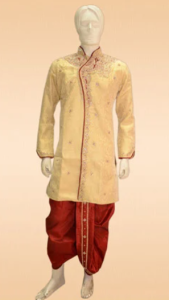
Image – Source
The Dhoti is a traditional lower garment worn by men throughout India, including Chhattisgarh. In this region, the Dhoti is usually made of handwoven cotton, with variations in silk for special occasions.
The Dhoti is wrapped around the waist and tied in a knot, leaving the legs free for easy movement. It is often worn with a Kurta or a Polkha (blouse) for formal or festive events.
The Dhoti holds cultural significance in Chhattisgarh, particularly among tribal men, as it is an essential part of their everyday attire.
It reflects simplicity and tradition, being practical for daily tasks while also representing cultural pride during festivals and ceremonies.
Dhoti Details
| Aspect | Description |
| Dress Name (Male) | Dhoti |
| Cultural Symbolism | It symbolises simplicity and tradition and is commonly worn in tribal and rural areas. |
| Fabric Type | Typically made from handwoven cotton, with silk variants for formal occasions. |
| Design Motifs | Simple, with plain white or cream colours, occasionally featuring simple borders. |
| Wearing Style | Wrapped around the waist and tied in a knot, leaving the legs free for movement. |
| Occasions for Use | Worn during daily tasks and festivals, as well as formal occasions like weddings. |
| Popular Accessories | Paired with a Kurta or Polkha, along with a shawl or angochha for formal wear. |
| Regional Variations | Minor variations in draping styles and fabric colours across different districts. |
| Artisan Crafting Techniques | Handwoven by local artisans using simple looms and natural fibers. |
| Gender Differences | Exclusively worn by men, while women wear sarees or Lugda. |
| Historical Roots | A timeless garment that has been worn by men in the region for centuries. |
| Seasonal Adaptations | Cotton Dhoti is worn in summer, while heavier fabrics are used in winter. |
| Cultural Significance | Represents the cultural heritage of rural men in Chhattisgarh. |
| Modern Variations | Some modern variations include lighter, more colourful fabrics, especially for festivals. |
| Handloom Heritage | Crafted by local handloom artisans, it contributes to the state’s traditional textile industry. |
8. Angochha
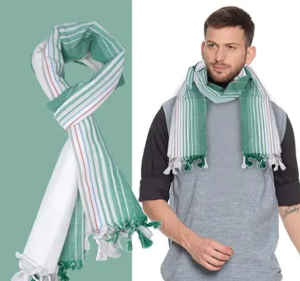
Image – Source
The Angochha is a narrow piece of cloth worn by men in Chhattisgarh, primarily as a protective headgear or a shoulder cloth.
It serves both practical and ceremonial purposes, offering protection against the harsh sun in rural areas. The Angochha is typically handwoven, featuring simple patterns and natural dyes, and is often paired with a Dhoti or Pichhori.
In addition to its practical use, the Angochha holds cultural significance, especially during religious ceremonies and festivals. It is an essential accessory in the traditional male attire, symbolising dignity and respect.
It is often worn during special occasions, such as weddings or local festivals, adding an extra layer of tradition to the outfit.
Angochha Details
| Aspect | Description |
| Dress Name (Male) | Angochha |
| Cultural Symbolism | Worn as a protective and ceremonial accessory, symbolising dignity and respect. |
| Fabric Type | Handwoven cotton, sometimes with simple patterns or borders. |
| Design Motifs | Minimalistic designs often feature plain colours or simple stripes. |
| Wearing Style | Wrapped around the head as protection from the sun or draped over the shoulder. |
| Occasions for Use | Used in daily life as protection from the heat and during festivals or religious ceremonies. |
| Popular Accessories | Paired with Dhoti or Pichhori, often along with silver jewellery during festive occasions. |
| Regional Variations | Variations in colours and patterns exist between districts, with tribal areas opting for simpler designs. |
| Artisan Crafting Techniques | Handwoven by local artisans using traditional looms and natural dyes. |
| Gender Differences | Exclusively worn by men, while women may use Dupattas in similar settings. |
| Historical Roots | A longstanding tradition in Chhattisgarh, used for practical and ceremonial purposes. |
| Seasonal Adaptations | Cotton variants are worn in summer, while heavier fabrics may be used in winter. |
| Cultural Significance | It represents respect and tradition, and it is often used in ceremonies and as a practical accessory. |
| Modern Variations | Contemporary versions may incorporate more intricate patterns or vibrant colours for festive occasions. |
| Handloom Heritage | Made using traditional handloom techniques in rural regions of Chhattisgarh. |
9. Chaddar
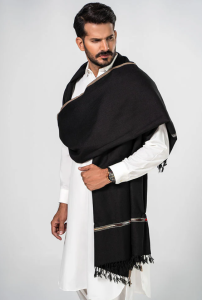
Image – Source
The Chaddar is a traditional shawl worn by men in Chhattisgarh, often used for both practical and ceremonial purposes.
This garment is typically handwoven from cotton or wool, depending on the season, and is draped over the shoulders or wrapped around the body for warmth.
The Chaddar is commonly worn during religious ceremonies or festive gatherings, where it adds an element of formality to the traditional Dhoti-Kurta outfit.
Beyond its practical use, the Chaddar symbolises respect and dignity. It is often gifted during special occasions or to honoured guests.
The Chaddar is also worn by elders and is considered a symbol of wisdom and status in many rural communities.
Chaddar Details
| Aspect | Description |
| Dress Name (Male) | Chaddar |
| Cultural Symbolism | It symbolises dignity and respect and is often worn during religious ceremonies and formal occasions. |
| Fabric Type | Handwoven from cotton or wool, depending on the season, offering comfort and warmth. |
| Design Motifs | Typically plain with minimalistic borders or stripes, often in neutral colours. |
| Wearing Style | Draped over the shoulders or wrapped around the body for warmth or as a ceremonial garment. |
| Occasions for Use | Commonly used during festivals, religious ceremonies, and in colder months for warmth. |
| Popular Accessories | Paired with Dhoti-Kurta or Pichhori, often accompanied by traditional headgear or silver ornaments. |
| Regional Variations | Variations in colour and design patterns can be seen across different regions, depending on local customs. |
| Artisan Crafting Techniques | Handwoven using traditional looms by artisans, preserving the local textile heritage of Chhattisgarh. |
| Gender Differences | Worn exclusively by men, women may wear shawls or Dupattas for similar occasions. |
| Historical Roots | A long-standing garment rooted in Chhattisgarh’s tribal traditions, symbolising respect in ceremonial contexts. |
| Seasonal Adaptations | Cotton Chaddar is worn during warmer months, while woollen versions are preferred in winter. |
| Cultural Significance | It represents wisdom and respect, and it is often gifted or worn during significant social or religious events. |
| Modern Variations | Modern adaptations feature intricate embroidery or vibrant colours to cater to contemporary fashion while maintaining its traditional essence. |
| Handloom Heritage | Handcrafted by artisans, contributing to the rich textile traditions of rural Chhattisgarh. |
10. Kosa Silk Kurta
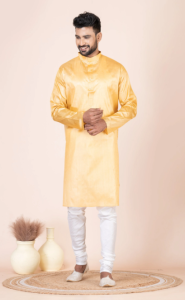
Image – Source
The Kosa Silk Kurta is a luxurious traditional garment worn by men in Chhattisgarh, made from the famous Kosa silk.
Known for its natural golden-brown hue and fine texture, this fabric is handwoven by skilled artisans, particularly from the Champa and Korba regions.
The Kurta is usually paired with a Dhoti or Pichhori and is worn during special occasions such as weddings, religious festivals, and cultural gatherings.
The Kosa Silk Kurta represents elegance and wealth, as Kosa silk is considered a prestigious fabric in India.
It has cultural importance in the state and is often passed down as a family heirloom. Men traditionally wear it during significant life events, reflecting Chhattisgarh’s deep-rooted textile heritage and craftsmanship.
Kosa Silk Kurta Details
| Aspect | Description |
| Dress Name (Male) | Kosa Silk Kurta |
| Cultural Symbolism | Represents luxury and elegance, typically worn during weddings and religious events. |
| Fabric Type | Made from Kosa silk, a rare variant of Tussar silk native to Chhattisgarh. |
| Design Motifs | Features simple designs or intricate embroidery, depending on the occasion. |
| Wearing Style | Worn as a Kurta, paired with a Dhoti or Pichhori for formal occasions. |
| Occasions for Use | Popular for weddings, cultural festivals, and formal gatherings. |
| Popular Accessories | Paired with gold or silver jewellery, such as cufflinks or brooches. |
| Regional Variations | Variations in design and colour are based on the Champa and Korba regions. |
| Artisan Crafting Techniques | Handwoven by skilled artisans using traditional looms and natural dyes. |
| Gender Differences | Worn by men, women wear Kosa silk sarees for similar occasions. |
| Historical Roots | Deeply rooted in the region’s ancient silk weaving traditions, reflecting cultural pride. |
| Seasonal Adaptations | Silk Kurta is preferred during cooler months, while lighter versions may be worn in the summer. |
| Cultural Significance | Symbolises wealth and heritage, often passed down through generations as heirlooms. |
| Modern Variations | Contemporary versions may include fusion designs, combining traditional silk with modern cuts. |
| Handloom Heritage | Produced in Champa and Korba, they are known for their master weavers and silk production. |
Conclusion
The traditional attire of Chhattisgarh offers a beautiful glimpse into the state’s rich cultural fabric. From the vibrant Kachhora saree to the luxurious Kosa silk garments, these clothes symbolize much more than fashion; they carry deep cultural and historical significance.
Worn during festivals, ceremonies, and even daily life, these garments showcase the intricate craftsmanship of Chhattisgarh’s handloom industry.
Today, as modern fashion evolves, these traditional attires continue to inspire designers, ensuring that Chhattisgarh’s rich textile heritage remains alive.
By preserving and promoting these traditional dresses, the state pays homage to its roots while adapting to contemporary trends. These timeless garments remain a testament to the cultural pride and legacy of Chhattisgarh.
FAQs About Traditional Dress of Chhattisgarh
What is the most popular fabric used in Chhattisgarh’s traditional attire?
Kosa silk is the most famous fabric, known for its durability, fine texture, and natural golden hue.
How do women in Chhattisgarh traditionally wear their sarees?
Women typically wear sarees like the Pata saree in styles such as Ganthi Marna or Chendra for practicality.
What role do tribal communities play in Chhattisgarh’s clothing traditions?
Tribal communities create traditional handwoven garments using natural dyes and motifs inspired by nature.
When is the Pichhori traditionally worn by men?
The Pichhori is commonly worn during festivals, weddings, or religious ceremonies, symbolising tradition and status.
What is unique about the aal border in Pata sarees?
The aal border is a signature deep red or maroon border, symbolising tradition and simplicity in tribal sarees.
Can modern fashion incorporate Chhattisgarh’s traditional attire?
Yes, designers are blending traditional elements like Kosa silk with contemporary designs for a modern twist.