


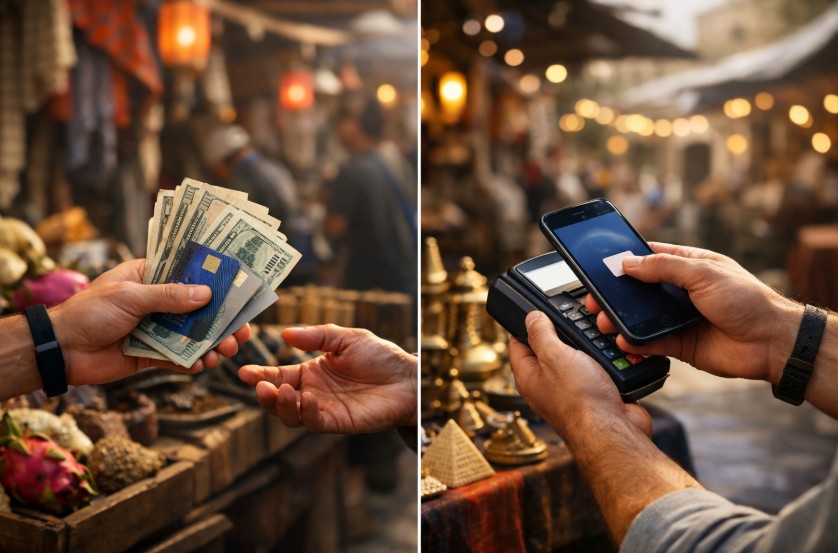

Explore whether traditional cash or decentralised digital assets offer better value for your next international journey in a rapidly shifting financial landscape. Imagine standing at a vibrant street-food stall in Mumbai or a boutique in Berlin, wondering whether your payment method is quietly inflating the cost of your trip.
Understanding the BTC to USD exchange rate, with live conversions available on Binance, and how it translates into real purchasing power is now a practical concern, not a speculative one, for travellers navigating multiple currencies in a single itinerary.
Because the currency environment changes quickly, the challenge is no longer access, but efficiency. The question is not simply what you can use abroad, but which option allows more of your budget to reach experiences rather than intermediaries.
This guide focuses on where money is lost, not just where it is spent, helping you choose the most effective tools for modern travel.
The Hidden Drain of Traditional Foreign Exchange

The cost of international transactions is often felt only after you are back home. Standard credit cards typically charge between 2.5% and 3% on transactions and withdrawals from ATMs incur a fee for using the overseas machine, in addition to any fees your domestic bank charges.
For instance, in markets like the Indian market, foreign exchange suppliers use markups that cannot be identified in real time. Information from the Wise Newsroom in December 2025 indicated that the exchange rate premium for Indian tourists was between 2% and 4% above the mid-market rate.
Physical currency brings with it another form of inefficiency. There are different kinds of inefficiencies brought about by the use of physical currency. Exchange booths at the airport will offer up to 10% below the currency’s value and the unused cash becomes “dead money.”
Rather than paying a price once, the system of the past imposes a series of frictions at all transition points, a price that must be paid at each transition to a country.
Bitcoin as a Borderless Travel Partner
Digital assets approach the same problem from a different angle. Instead of optimising exchange points, they remove many of them entirely. A decentralised network allows value to move without banking hours, correspondent institutions or country-specific rails.
By mid-2025, Bitcoin dominance reached 65.1%, according to Binance data, reflecting a level of market maturity that reduced the extreme volatility associated with earlier adoption phases. This shift matters less for speculation and more for predictability, which is what travellers require when managing real expenses.
For extended stays or remote work abroad, the fee structure is more important than the fee amount. Traditional wire transfers typically scale costs as a percentage of the amount sent. Bitcoin network fees, by contrast, do not increase simply because the value transferred is higher, making them particularly effective for self-funding across borders.
This removes the need for multi-day settlement delays common to SWIFT transfers and returns timing control to the traveller rather than the institution.
Speed, Security and Practical Use Abroad
Security concerns change when you are far from home. Lost cash is unrecoverable, but digital assets are secured by cryptographic keys that can be restored even if a device is lost. The risk shifts from physical possession to access management, which is easier to control with preparation.
Instead of repeating the same advantage in different forms, the practical benefits can be summarised clearly:
- Global access without bank intervention
- Transparent transaction records
- Rapid settlement measured in minutes
- Growing merchant acceptance in urban centres
According to the Binance 2025 Year in Review report, over 26 million people used integrated digital payment solutions in 2025, increasing the likelihood that travellers encounter crypto-ready infrastructure in major cities. This reduces the constant need to exit and re-enter local currencies, avoiding repeated exposure to unfavourable spreads.
What 2025 Market Conditions Mean for Travellers?
The importance of digital payment services is evident in the Global South. In the 2025 edition of the Chainalysis Global Crypto Adoption Index, India topped the list for the third consecutive year.
For a traveller, this means providing functional infrastructure. Whether it is payment for a co-working facility in Bengaluru or transport in a regional hub, digital acceptance has increasingly become valuable rather than an experimental solution.
At the institutional level, Binance Research found that more transparent regulatory requirements and a stronger focus on custody services led to spot Bitcoin ETF assets under management of 114.8 billion USD as of December 2025. Institutional-level A liquid market such as this ensures translation efficiency from digital balances.
Instead of existing on the periphery, travellers are now part of an interconnected financial stratum.
Building Your Ultimate Travel Money Strategy
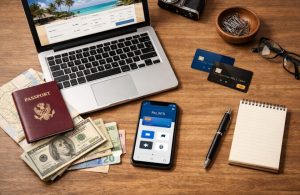
The most effective strategy avoids exclusivity. No single method performs best in every situation, which is why a tiered approach delivers the strongest results.
Use digital assets for:
- High-value bookings
- Cross-border self-transfers
- Long-term stays
Keep a local debit card for low-friction daily spending, while remaining aware of recurring percentage-based fees. Maintain a modest reserve of local cash for areas where digital infrastructure has not yet reached.
By monitoring market conditions and conversion timing, you ensure that your travel budget flows toward experiences rather than financial leakage. The goal is adaptability across environments, from dense urban centres to remote regions.
When repetition is removed and efficiency becomes the focus, you stop reacting to systems and start using them deliberately, transforming how you fund your journey rather than merely how you pay for it.