



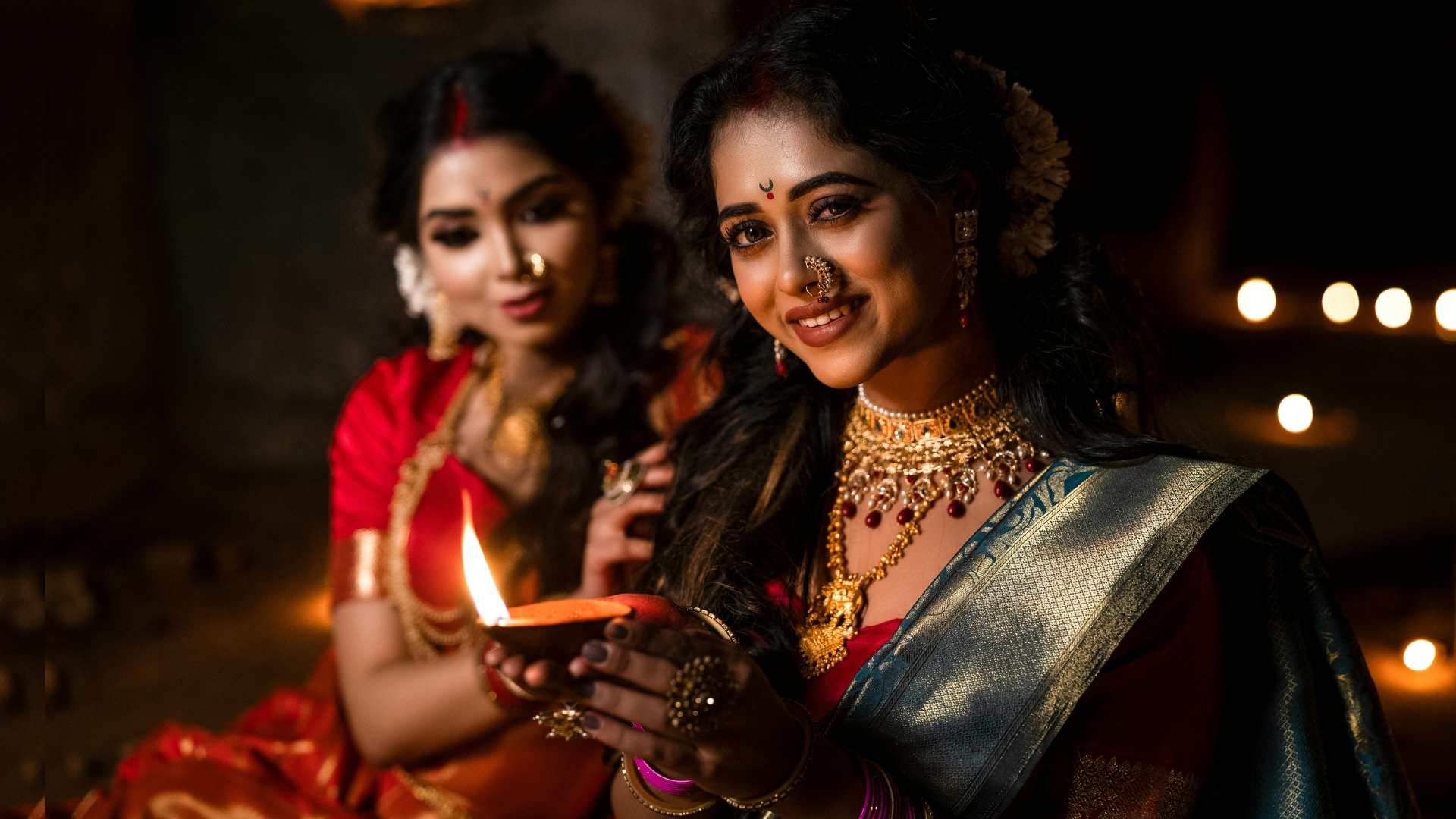

Jharkhand, known for its rich cultural heritage and tribal traditions, boasts a diverse array of traditional clothing that reflects the simplicity and vibrancy of its people.
The state is home to various tribal communities, including the Santhal, Munda, and Oraon, whose customs are deeply woven into their attire.
Each piece of traditional clothing tells a story of connection to the land, nature, and ancestral roots.
From the colorful Panchi and Parhan to the elegant Santhali Saree, Jharkhand’s clothing represents its deep-seated traditions.
Whether for daily wear or grand celebrations, Jharkhand’s traditional costumes symbolize the state’s cultural pride, practicality, and respect for craftsmanship, creating a visual tapestry of the region’s identity.
What is the Cultural Significance of Traditional Dress in Jharkhand?
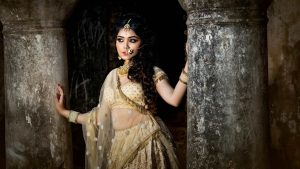
Traditional clothing in Jharkhand is deeply rooted in the cultural identity of the state’s various tribal communities.
Each tribe, such as the Santhal, Munda, and Oraon, has its unique attire that reflects its history, rituals, and way of life.
These garments are not just for practical use but are worn during festivals like Sarhul and Karam, representing the tribe’s close connection to nature and spiritual beliefs.
The simplicity of the designs and the use of local, handwoven fabrics show a deep respect for the environment and tribal heritage.
Jharkhand’s traditional attire plays a crucial role in preserving tribal customs and traditions, keeping them alive for future generations.
How Do Jharkhand’s Traditional Dresses Reflect Its Tribal Heritage?
Jharkhand’s traditional dresses are a reflection of its rich tribal heritage, with each community expressing its distinct identity through clothing.
Tribal motifs, natural dyes, and handwoven fabrics are some of the elements that signify the connection to the land and the environment.
For instance, the Panchi and Parhan, widely worn by both men and women, showcase the tribe’s emphasis on simplicity and functionality.
The use of earth tones and organic materials symbolizes a deep relationship with nature.
These traditional dresses tell the story of the state’s indigenous people, encapsulating their customs, beliefs, and cultural practices passed down through generations.
What Role Do Festivals Play in Jharkhand’s Traditional Clothing?
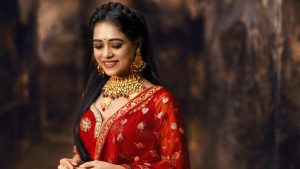
Traditional clothing takes center stage at festivals in Jharkhand, such as Sarhul, Karam, and Tusu.
During these events, the tribal communities dress in their finest, most culturally significant attire, showcasing their heritage.
For women, this often means wearing vibrant Santhali or Mundari sarees adorned with traditional jewellery.
Men typically wear the Bhagwan, Dokanda, or Kurta Pajama paired with simple accessories.
The traditional garments worn during festivals are more than just clothing; they are symbols of cultural pride and unity, reflecting the deep-rooted customs and beliefs associated with the festivals. These occasions offer a way for people to preserve and celebrate their traditional attire.
How Has Modern Fashion Influenced Jharkhand’s Traditional Clothing?
While traditional clothing in Jharkhand remains deeply significant, modern fashion has gradually influenced its designs and fabrics.
Today, many people opt for contemporary versions of traditional outfits, such as brighter fabrics, modern cuts, and updated embroidery techniques.
For example, the Kurta Pajama has evolved to include shorter lengths and more stylish fits, making it popular even in urban areas.
Similarly, sarees now feature more intricate patterns and are made with lightweight materials for easier wear.
However, despite these modern adaptations, the essence of Jharkhand’s traditional attire remains, as people continue to wear these garments during festivals and special occasions, blending old and new styles.
What Materials Are Commonly Used in Jharkhand’s Traditional Dress?
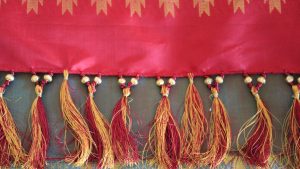
Jharkhand’s traditional dresses are predominantly made from locally sourced, handwoven fabrics, such as cotton and silk.
Cotton is favoured for its comfort and breathability, making it ideal for the region’s warm climate. Silk, particularly Tussar silk, is highly prized and worn during festivals and special occasions.
In tribal areas, fabrics are often dyed using natural colours, reflecting a strong connection to nature. These materials are crafted into simple yet elegant garments that serve both functional and symbolic purposes.
The emphasis on natural fabrics also aligns with the region’s eco-friendly practices, ensuring that these materials are sustainable and rooted in traditional craftsmanship.
How Are Jharkhand’s Traditional Dresses Preserved in Modern Times?
The preservation of traditional dresses in Jharkhand is an important cultural effort, especially in a rapidly modernizing world.
Many people continue to wear these garments during festivals, rituals, and community gatherings, keeping the cultural significance alive.
Artisans and local weavers play a key role in preserving traditional techniques, using handwoven fabrics and natural dyes.
Additionally, cultural initiatives, including folk performances, exhibitions, and heritage festivals, promote traditional attire, encouraging younger generations to embrace their roots.
While modern fashion has influenced some aspects of Jharkhand’s clothing, the timeless beauty of its traditional dresses remains a vital part of the state’s cultural identity.
Top 10 Traditional Dress of Jharkhand
1. Panchi and Parhan
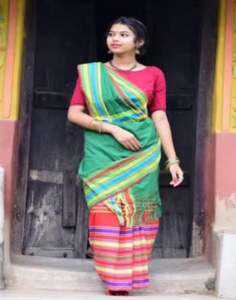
Image – Source
The Panchi and Parhan are traditional dresses worn by the tribal women of Jharkhand, particularly during cultural events and festivals like Sarhul and Karma.
The outfit consists of the Panchi (upper garment) and the Parhan (lower garment), both made from locally sourced, handwoven fabrics.
This attire represents the simplicity and cultural richness of Jharkhand’s rural life.
The attire is commonly worn in daily life as well as during special occasions. Women often accessorize this dress with traditional jewellery, including silver anklets, necklaces, and bangles.
The Panchi and Parhan also signify the wearer’s connection to nature, with the colour palette reflecting earthy tones, symbolizing the land and its environment.
Panchi and Parhan Dress Details
| Feature | Description |
| Dress Name | Panchi (upper garment) and Parhan (lower garment) |
| Cultural Significance | Worn by tribal women during cultural events, festivals, and daily life, symbolizing simplicity and tradition. |
| Fabric & Textiles | Handwoven cotton or silk, highlighting natural, breathable fabrics. |
| Design Features | The Panchi is a sleeveless wrap, and the Parhan is a skirt-like garment with pleats, often adorned with tribal patterns. |
| Color Palette | Earthy tones like red, orange, brown, and green represent nature and heritage. |
| Wearing Style | The Panchi is wrapped around the upper body, and the Parhan is tied at the waist. |
| Occasions for Use | Festivals, marriage ceremonies, agricultural rituals, and daily life in rural areas. |
| Accessories | Paired with traditional jewellery such as silver anklets and necklaces. |
| Craftsmanship | Handmade by local artisans using intricate weaving techniques. |
| Cultural Importance | Reflects the tribal identity of Jharkhand. |
| Modern Variations | Brighter fabrics and modern stitching styles. |
| Seasonal Adaptation | Cotton is used for summer, and silk or wool is used for colder months. |
| Pattern and Embroidery | Embroidered tribal motifs representing cultural stories. |
| Influence of Local Tribes | Different tribal patterns based on regions and tribes, such as Santhal or Oraon. |
2. Santhali Saree
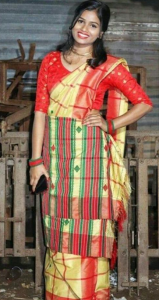
Image – Source
The Santhali Saree is worn by women of the Santhal tribe, one of the largest tribal groups in Jharkhand.
These sarees are lightweight and easy to wear, designed to suit the lifestyle of Santhali women, who are often engaged in agricultural activities.
Typically made from cotton, these sarees are plain or adorned with simple tribal motifs.
The Santhali Saree is not just everyday wear; it’s also used in rituals, dances, and festivals.
Santhali women pair the saree with traditional silver ornaments like necklaces and anklets, enhancing the cultural vibrancy of this attire.
Santhali Saree Dress Details
| Feature | Description |
| Dress Name | Santhali Saree |
| Cultural Significance | Represents the lifestyle and traditions of the Santhal tribe, often worn during cultural dances and festivals. |
| Fabric & Textiles | Typically made from cotton for comfort and breathability. |
| Design Features | Simple design, with minimal patterns, focused on utility. |
| Color Palette | Soft, natural tones such as white, red, and brown. |
| Wearing Style | Draped in a traditional style, leaving the arms free for work and rituals. |
| Occasions for Use | Cultural festivals, dances, and daily agricultural activities. |
| Accessories | Paired with silver jewellery like necklaces and anklets. |
| Craftsmanship | Local artisans hand weave the sarees using traditional methods. |
| Cultural Importance | Reflects the heritage of the Santhal tribe. |
| Modern Variations | Sometimes modernized with brighter colours and trendy designs. |
| Seasonal Adaptation | Lightweight cotton makes it suitable for hot climates. |
| Pattern and Embroidery | Minimal patterns or tribal motifs that enhance simplicity. |
| Influence of Local Tribes | Directly influenced by the Santhal tribe’s cultural values. |
3. Nagpuri Saree
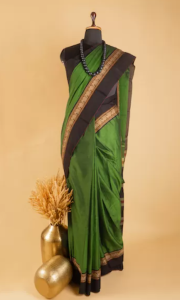
Image – Source
The Nagpuri Saree is a popular traditional dress worn by women in the Nagpur region of Jharkhand. This saree is typically made from cotton or silk and is known for its vibrant colours and comfortable design.
The saree is commonly worn during festivals and special occasions, and it showcases the craftsmanship of local weavers.
The Nagpuri Saree is paired with traditional jewellery, such as silver or brass ornaments, adding a touch of elegance.
The saree’s vibrant patterns and colours represent the energy and culture of the region, making it a symbol of pride for the women of Jharkhand.
Nagpuri Saree Dress Details
| Feature | Description |
| Dress Name | Nagpuri Saree |
| Cultural Significance | Commonly worn during festivals and special occasions, representing the cultural identity of the Nagpur region. |
| Fabric & Textiles | Made from cotton or silk for comfort and durability. |
| Design Features | Simple yet elegant patterns, often featuring local motifs. |
| Color Palette | Bright colours like red, yellow, green, and blue are commonly used. |
| Wearing Style | Draped in a classic saree style, it is suitable for both casual and formal events. |
| Occasions for Use | Worn during festivals, cultural events, and daily life in rural areas. |
| Accessories | Traditionally paired with silver or brass jewellery. |
| Craftsmanship | Handwoven by local artisans, often reflecting regional designs. |
| Cultural Importance | Symbolizes the cultural richness of the Nagpur region. |
| Modern Variations | Modern designs include updated patterns and brighter fabrics. |
| Seasonal Adaptation | Cotton versions are worn during summer, while silk sarees are preferred for winter. |
| Pattern and Embroidery | Local patterns that symbolize regional heritage. |
| Influence of Local Tribes | Regional influences play a big role in the design and use of the Nagpuri Saree. |
4. Mundari Saree
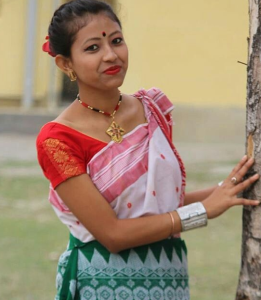
Image – Source
The Mundari Saree is a symbol of cultural preservation. Each saree embodies the tribe’s deep respect for tradition and nature.
Its design is often simple yet elegant, allowing the Munda women to perform their daily tasks while maintaining a graceful appearance easily.
The saree’s draping style, distinct to the Munda tribe, is unique in its practicality and aesthetic. It showcases the intricate knowledge passed down through generations.
During festivals and tribal ceremonies, the Mundari Saree takes on a special role. Women wear it to honour their heritage and display their solidarity with the community, making it a garment that holds both cultural and personal significance.
Mundari Saree Dress Details
| Feature | Description |
| Dress Name | Mundari Saree |
| Cultural Significance | Worn by Munda tribe women, representing their cultural values and heritage. |
| Fabric & Textiles | Made from local cotton, ensuring breathability and comfort. |
| Design Features | Simple design with minimal decoration focused on utility. |
| Color Palette | Natural, earthy tones like brown, red, and green. |
| Wearing Style | Draped in a traditional style specific to the Munda tribe. |
| Occasions for Use | Commonly worn during tribal ceremonies, festivals, and daily life. |
| Accessories | Paired with traditional silver jewellery such as bangles and necklaces. |
| Craftsmanship | Handmade by artisans using ancient weaving techniques. |
| Cultural Importance | Reflects the cultural pride and traditions of the Munda tribe. |
| Modern Variations | Some modern variations include brighter fabrics and modern stitching. |
| Seasonal Adaptation | Cotton is ideal for the warm climate of Jharkhand. |
| Pattern and Embroidery | Tribal motifs are often inspired by nature and local legends. |
| Influence of Local Tribes | Directly influenced by Munda culture, with unique patterns and styles. |
5. Dokanda Saree
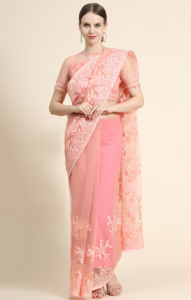
Image – Source
The Dokanda Saree is a testament to the craftsmanship of local weavers who use traditional techniques to create durable and comfortable fabric.
Its practicality makes it the go-to attire for women engaged in agricultural and household tasks while maintaining an understated elegance.
The saree’s natural, earthy colours, such as browns, greens, and muted reds, are inspired by Jharkhand’s forests and landscapes, creating a visual connection between the wearer and her environment.
Worn during tribal rituals and festivals, the Dokanda Saree plays a vital role in community celebrations, symbolizing unity and the tribe’s deep-rooted relationship with their land and culture.
Dokanda Saree Dress Details
| Feature | Description |
| Dress Name | Dokanda Saree |
| Cultural Significance | Worn by rural and tribal women during everyday activities and festivals. |
| Fabric & Textiles | Handwoven cotton, ensuring comfort and breathability. |
| Design Features | Minimalist design with a focus on functionality. |
| Color Palette | Earthy tones like brown, green, and red. |
| Wearing Style | Worn as a simple draped saree, it is easy to manage during daily tasks. |
| Occasions for Use | Worn during tribal festivals and rituals, as well as everyday life. |
| Accessories | Paired with simple jewellery such as silver anklets and necklaces. |
| Craftsmanship | Handmade by local artisans, highlighting traditional weaving. |
| Cultural Importance | Represents the lifestyle and values of tribal communities. |
| Modern Variations | Slightly modernized with lighter fabrics for ease. |
| Seasonal Adaptation | Cotton fabric is suitable for the warm climate. |
| Pattern and Embroidery | Simple designs with minimal embroidery or embellishment. |
| Influence of Local Tribes | Primarily influenced by tribal communities in Jharkhand. |
6. Bhagwan and Dokanda
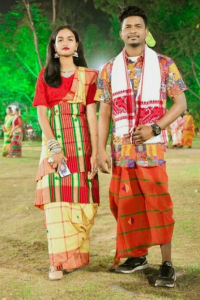
Image – Source
The Bhagwan and Dokanda are significant traditional garments worn by men of the Santhal tribe in Jharkhand.
The Bhagwan refers to a simple loincloth that wraps around the lower body, while the Dokanda is a shawl-like upper garment that drapes over the shoulders.
These garments are not only practical for everyday use but also hold a strong cultural significance.
Worn during festivals, ceremonies, and special occasions, the attire reflects the tribe’s close connection to nature and their simplistic lifestyle.
The Dokanda often features minimal tribal patterns, and together with the Bhagwan, they symbolize the deep-rooted traditions of the Santhal tribe.
Bhagwan and Dokanda Dress Details
| Feature | Description |
| Dress Name | Bhagwan (loincloth) and Dokanda (shawl) |
| Cultural Significance | Worn by Santhal men during cultural festivals, religious ceremonies, and daily life, symbolizing simplicity and traditional values. |
| Fabric & Textiles | Made from handwoven cotton, allowing breathability and comfort in hot climates. |
| Design Features | The Bhagwan is a simple wrap for the lower body, and the Dokanda is a draped upper garment with subtle patterns. |
| Color Palette | Primarily earthy tones such as white, brown, and beige, with occasional vibrant borders. |
| Wearing Style | The Bhagwan is wrapped around the waist, and the Dokanda is draped over the shoulders. |
| Occasions for Use | Commonly worn during festivals, traditional ceremonies, and daily agricultural work. |
| Accessories | Paired with simple ornaments like beaded necklaces or traditional headgear. |
| Craftsmanship | Handcrafted by local artisans, with a focus on utility and tradition. |
| Cultural Importance | Represents the simplicity and cultural heritage of the Santhal tribe. |
| Modern Variations | Lighter versions are used for modern-day comfort. |
| Seasonal Adaptation | The cotton fabric makes it ideal for hot summers, while woollen Dokanda is used in colder weather. |
| Pattern and Embroidery | Minimalistic tribal patterns are sometimes included in the Dokanda. |
| Influence of Local Tribes | Strongly influenced by the Santhal tribe, with a focus on simplicity and functionality. |
7. Panchi and Parhan (Men’s Version)
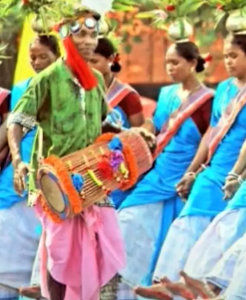
Image – Source
In certain parts of Jharkhand, men also wear a version of the Panchi and Parhan, though it is more commonly seen as women’s attire.
For men, the Panchi serves as an upper garment, and the Parhan is a loose wrap around the lower body. This attire is particularly favored by tribal communities during festivals and rituals.
The men’s version of the Panchi and Parhan is simple and durable, making it ideal for rural life.
The cloth is often handwoven from local cotton, and the style allows ease of movement, reflecting the practical needs of the wearer in agricultural or ceremonial settings.
Panchi and Parhan Dress Details
| Feature | Description |
| Dress Name | Panchi (upper garment) and Parhan (lower garment) |
| Cultural Significance | Worn by tribal men during festivals and agricultural rituals, symbolizing tradition and practicality. |
| Fabric & Textiles | Handwoven cotton, highlighting its durability and comfort. |
| Design Features | Simple design, with the Parhan wrapped around the lower body and the Panchi draped over the shoulders. |
| Color Palette | Natural tones like white, grey, and brown, often with minimal borders. |
| Wearing Style | The Parhan is wrapped around the waist, and the Panchi is loosely draped over the upper body. |
| Occasions for Use | Festivals, daily life, and agricultural tasks. |
| Accessories | Traditionally worn with headscarves or simple bead necklaces. |
| Craftsmanship | Locally made by artisans, ensuring durability for everyday use. |
| Cultural Importance | Reflects the shared tribal identity of Jharkhand’s rural communities. |
| Modern Variations | Lighter fabrics with modern cuts for easier wear. |
| Seasonal Adaptation | Cotton versions for summer, with thicker materials for colder months. |
| Pattern and Embroidery | Minimal tribal patterns on the borders. |
| Influence of Local Tribes | Tribal influences from various regions of Jharkhand, including the Santhal and Oraon communities. |
8. Lungi and Gamcha
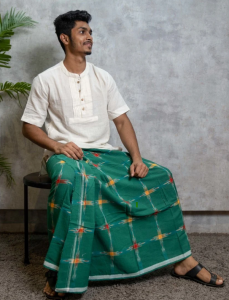
Image – Source
The Lungi and Gamcha are among the most common and functional traditional garments worn by men in rural Jharkhand.
The Lungi is a simple wrap-around lower garment made of cotton, while the Gamcha serves as a versatile towel or scarf, often draped around the shoulders or tied around the head.
Ideal for both daily tasks and ceremonial use, the Lungi and Gamcha represent simplicity and practicality.
This traditional attire is popular among farmers and labourers due to its comfort and ease of wear in Jharkhand’s warm climate.
Lungi and Gamcha Dress Details
| Feature | Description |
| Dress Name | Lungi (lower garment) and Gamcha (towel/scarf) |
| Cultural Significance | Worn by men for daily work, particularly in rural areas, symbolizing simplicity and comfort. |
| Fabric & Textiles | Made from lightweight cotton for ease and comfort in warm weather. |
| Design Features | The Lungi is a wrap-around skirt-like garment, and the Gamcha is used as a multipurpose cloth. |
| Color Palette | Bright colours such as red, blue, and green are common for the Lungi, while the Gamcha typically has checkered patterns. |
| Wearing Style | The Lungi is tied around the waist, and the Gamcha is draped over the shoulders or tied around the head. |
| Occasions for Use | Worn during daily agricultural work, religious ceremonies, and casual events. |
| Accessories | Occasionally paired with a simple headgear or turban. |
| Craftsmanship | Handwoven by local artisans, using simple techniques that prioritize functionality. |
| Cultural Importance | Reflects the practicality of Jharkhand’s rural communities. |
| Modern Variations | Contemporary versions are made with lighter fabrics and more intricate patterns. |
| Seasonal Adaptation | Perfect for hot summers, while warmer fabrics are used in winter. |
| Pattern and Embroidery | Gamchas often feature checkered patterns, while Lungis are plain or patterned with simple borders. |
| Influence of Local Tribes | Common across various rural communities in Jharkhand. |
9. Kurta Pajama
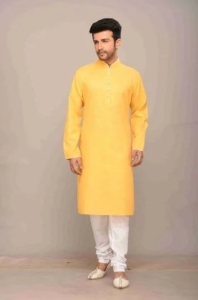
Image – Source
The Kurta Pajama is a widely worn traditional outfit for men in Jharkhand, especially during festivals, religious ceremonies, and family functions.
The Kurta is a long, loose-fitting shirt that reaches the knees, while the Pajama refers to the fitted pants worn underneath. This attire is versatile, offering both comfort and style.
The Kurta Pajama is often made of cotton or silk and comes in a variety of colours and designs. It can be plain or intricately embroidered, depending on the occasion.
This outfit is also favoured in urban areas, where modern cuts and fabrics give it a contemporary twist.
Kurta Pajama Dress Details
| Feature | Description |
| Dress Name | Kurta (long shirt) and Pajama (fitted pants) |
| Cultural Significance | Worn by men during festivals, religious ceremonies, and special occasions. |
| Fabric & Textiles | Made from cotton, silk, or a blend of both, offering comfort and elegance. |
| Design Features | The Kurta is loose-fitting and knee-length, while the Pajama is fitted to the legs. |
| Color Palette | Wide variety of colours, from subtle whites and creams to vibrant reds, blues, and greens. |
| Wearing Style | The Kurta is worn over the Pajama, sometimes paired with a scarf or jacket. |
| Occasions for Use | Worn during festivals, family events, and formal gatherings. |
| Accessories | Paired with a turban or scarf and occasionally traditional footwear like Mojaris. |
| Craftsmanship | Made by skilled tailors, with intricate embroidery on formal occasions. |
| Cultural Importance | A staple of Indian men’s fashion, blending tradition with modern styles. |
| Modern Variations | Contemporary cuts, shorter lengths, and brighter fabrics are becoming more popular. |
| Seasonal Adaptation | Cotton is ideal for summer, while silk and woolen variations are preferred in colder months. |
| Pattern and Embroidery | Embroidery and patterns are common on the Kurta, especially for formal events. |
| Influence of Local Tribes | Adopted widely across urban and rural regions, with local variations. |
10. Dhoti
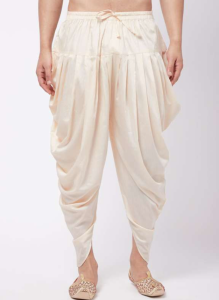
Image – Source
The Dhoti is not just an article of clothing; it is deeply intertwined with Jharkhand’s men’s spiritual and cultural life.
Its long, flowing design allows maximum comfort in Jharkhand’s warm climate, making it a practical choice for everyday wear and religious observances.
Traditionally worn by elders and spiritual leaders, the Dhoti symbolizes wisdom and adherence to age-old customs.
It is often paired with a Kurta or Angavastram during festivals and sacred ceremonies, enhancing its ceremonial importance.
While cotton dhotis are common for daily wear, silk dhotis are reserved for weddings, temple rituals, and other special occasions, where their rich fabric adds to the grandeur of the event.
Dhoti Dress Details
| Feature | Description |
| Dress Name | Dhoti |
| Cultural Significance | Worn during religious ceremonies, festivals, and special occasions, symbolizing tradition and spirituality. |
| Fabric & Textiles | Made from cotton or silk, depending on the occasion. |
| Design Features | A long piece of cloth wrapped around the waist and legs, with front pleats for easy movement. |
| Color Palette | Primarily white or cream, with occasional borders in vibrant colours like red, gold, or green. |
| Wearing Style | Wrapped around the waist, with pleats in the front, and sometimes tied with a belt. |
| Occasions for Use | Religious festivals, ceremonies, and traditional rituals. |
| Accessories | Often paired with a simple Kurta or scarf. |
| Craftsmanship | Handwoven by local artisans, with an emphasis on quality and tradition. |
| Cultural Importance | A symbol of purity and tradition in Indian culture. |
| Modern Variations | Silk versions with modern designs are worn during formal events. |
| Seasonal Adaptation | Cotton Dhoti is worn in summer, while silk is preferred for winter or ceremonial use. |
| Pattern and Embroidery | Some Dhotis feature decorative borders or patterns, especially during formal events. |
| Influence of Local Tribes | Worn across various tribes and communities, with slight regional variations. |
Conclusion
The traditional dresses of Jharkhand are more than just clothing; they celebrate culture, history, and heritage.
Each garment, whether it’s the Bhagwan and Dokanda worn by men or the intricate Mundari Saree donned by women, encapsulates the region’s spirit and its people.
These dresses remain significant today, especially during festivals, ceremonies, and cultural events, preserving Jharkhand’s tribal legacy.
In a rapidly modernizing world, these attires serve as a reminder of the importance of cultural identity and sustainability.
Jharkhand’s traditional clothing proudly demonstrates the state’s enduring values, diversity, and artistic excellence.
FAQs About Traditional Dress of Jharkhand
What is the most popular traditional dress in Jharkhand for women?
The Panchi and Parhan are widely worn by tribal women, especially during festivals and cultural events.
Which traditional dress is commonly worn by men in Jharkhand?
The Bhagwan and Dokanda are popular among men, particularly in the Santhal tribe, for ceremonies and daily wear.
What role does the Santhali Saree play in Jharkhand’s culture?
The Santhali Saree symbolizes the heritage of the Santhal tribe and is worn during cultural dances and festivals.
How do festivals influence traditional clothing in Jharkhand?
During festivals like Sarhul and Karam, people wear vibrant, culturally significant traditional attire.
What materials are used in Jharkhand’s traditional clothing?
Handwoven cotton and Tussar silk are common fabrics, reflecting the region’s eco-friendly textile practices.
Has modern fashion influenced traditional Jharkhand attire?
Yes, modern adaptations include brighter fabrics and contemporary cuts, but the essence of traditional dress remains intact.