


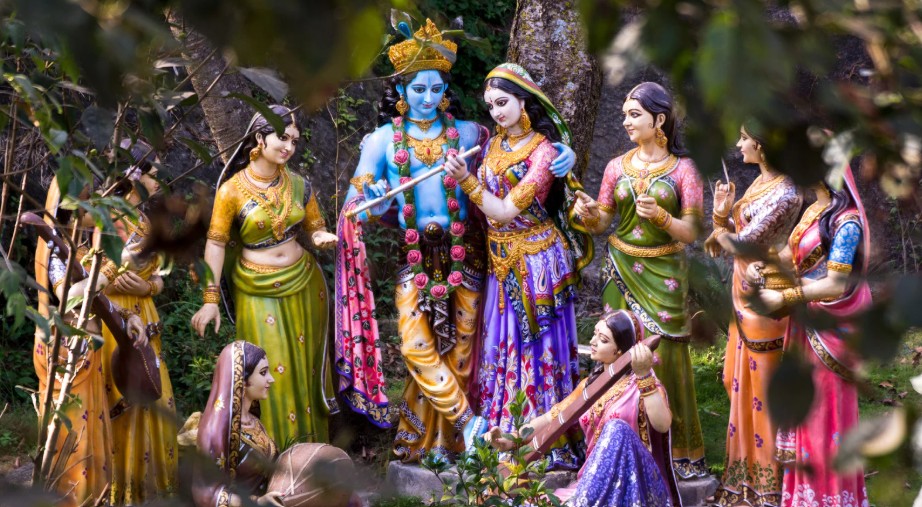

Have you ever wondered when is the perfect time is to witness the divine presence of Lord Krishna at the Bankey Bihari Temple in Vrindavan? Known for its spiritual ambiance and mystic aura, this temple isn’t just a place of worship, it’s a living legend.
From the rhythmic drawing of curtains every few minutes to prevent the deity from leaving with devotees, to the absence of early Mangla Aarti as the Lord is treated like a child needing rest, every aspect of this temple is unique.
The charm of Lord Krishna in the Tribhanga posture, the rituals steeped in devotion, and the festivals that draw thousands each year, all make the Bankey Bihari Temple a spiritually enriching experience. Understanding the temple’s timings and aarti schedule is essential for planning a soul-satisfying visit. Let’s explore everything you need to know for 2025.
What Are the Bankey Bihari Temple Timings in 2025?
Image – Source
The Bankey Bihari Temple follows two distinct seasonal schedules, one for summer and another for winter. These timings ensure that the deity’s daily routine and worship ceremonies are performed with utmost devotion and care.
Here’s a breakdown of the daily darshan timings in both seasons:
| Season | Event | Morning Timing | Evening Timing |
| Summer | Mandir Open | 07:45 AM | 05:30 PM |
| Shringar Aarti | 08:00 AM | ||
| Bhog | 11:00 – 11:30 AM | 08:30 – 09:00 PM | |
| Aarti & Closing | 12:00 Noon | 09:30 PM | |
| Winter | Mandir Open | 08:45 AM | 04:30 PM |
| Shringar Aarti | 09:00 AM | ||
| Bhog | 12:00 – 12:30 PM | 07:30 – 08:00 PM | |
| Aarti & Closing | 01:00 PM | 08:30 PM |
Key points to remember for 2025:
- Timings may vary slightly on festivals.
- Summer schedule usually starts from March and lasts till October.
- Winter schedule is followed from November to February.
- Ensure to arrive at least 30 minutes early to secure a good spot for darshan.
Being aware of the precise schedule helps you experience all rituals and avoid the rush.
Detailed Daily Rituals and Aarti Schedule
The daily rituals at Bankey Bihari Temple follow a strict devotional routine that is centered on honoring Lord Krishna in his most lovable form as a child. Each part of the day is marked by a different type of seva or aarti, performed with love and reverence by the Goswamis.
- Shringar Aarti: The day begins with Shringar Aarti, where the deity is bathed, dressed in beautiful garments, and adorned with jewelry. This happens at 8:00 AM during summer and 9:00 AM in winter. Devotees gather in large numbers to catch a glimpse of this sacred ritual.
- Bhog Seva Timings: Next, Bhog, or the food offering, is made. In the morning, it occurs from 11:00 to 11:30 AM (summer) and 12:00 to 12:30 PM (winter). In the evening, it is conducted from 8:30 to 9:00 PM in summer and 7:30 to 8:00 PM in winter. The bhog includes sweets, fruits, and traditional Indian delicacies.
- Aarti & Curtain Rituals: Final aarti and temple closing take place at 12:00 Noon and 9:30 PM in summer. In winter, it’s done at 1:00 PM and 8:30 PM. Curtains are drawn every few minutes during darshan, reflecting the belief that uninterrupted gazing may compel the deity to follow the devotee home.
- Mangla Aarti (Special): Mangla Aarti is not performed daily. It’s only held on Krishna Janmashtami and on rare occasions, at around 4:00 AM, signifying the birth hour of Lord Krishna. It’s the most awaited moment for devotees.
Witnessing these rituals brings an overwhelming sense of peace and spiritual upliftment.
Special Rituals and Customs at Bankey Bihari Temple
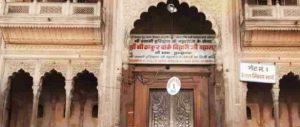
Image – Source
Bankey Bihari Temple is unlike any other Krishna temple in India due to its deeply symbolic and spiritually rich customs. Every ritual here reflects love, care, and the childlike nature of Lord Krishna.
The most distinctive feature is the curtain-drawing tradition. Every five to ten minutes, a curtain is pulled over the idol during darshan. This practice stems from a popular belief that Lord Bankey Bihari, in his supreme charm, may follow devotees home if they gaze at him for too long. The intermittent view prevents such spiritual “abduction.”
Another unique aspect is that no Mangla Aarti is performed daily. Since the deity is worshipped as a small child, priests avoid waking him early in the morning. However, an exception is made once a year, on Krishna Janmashtami, when Mangla Aarti is performed to celebrate his divine birth.
The temple also avoids ringing bells. This is again rooted in the belief that loud noises may disturb the sleeping Lord. Other rare customs include the Sharad Purnima Darshan, where Lord Bihari Ji holds a flute only once a year, and during the Shravan month, when the deity is placed on a beautifully decorated swing in celebration of Jhulan Yatra.
These spiritual gestures create a sacred atmosphere and uphold the temple’s divine aura, connecting devotees with Krishna in the most tender way possible.
History of Bankey Bihari Temple, Vrindavan
The origins of Bankey Bihari Temple are rooted in divine revelation and devotional love. The temple stands as a physical manifestation of a miracle witnessed by the great saint Swami Haridas, a spiritual guru and musician born in 1478 AD in Haridaspur near Aligarh.
According to legend, while meditating and singing in Nidhivan, Swami Haridas was blessed by the appearance of Shyama-Shyam, the divine couple Radha and Krishna. Responding to the saint’s prayer, the couple transformed into a single idol and remained on Earth for the devotees. This charming black idol is now enshrined in Bankey Bihari Temple.
The name Bankey Bihari is a combination of two Sanskrit words, “Bankey,” meaning bent in three places, and “Bihari,” meaning enjoyer. It refers to Lord Krishna’s iconic Tribanga posture, symbolizing divine beauty and grace.
The temple was originally constructed near Nidhivan but was later shifted to its present location around 1864 due to disputes among religious followers.
The architecture was developed in the Rajasthani style, and the rituals were formalized by Swami Haridas’s disciple, Goswami Jagannath, whose lineage still performs the sewa (service) today.
The story of Bankey Bihari’s appearance continues to attract pilgrims and spiritual seekers from across the globe, adding layers of legend to this already sacred space.
Architecture and Aesthetic Significance
The architecture of the Bankey Bihari Temple is as mesmerizing as the deity enshrined within. Constructed in 1862 AD, the temple beautifully reflects traditional Rajasthani architecture, blended with the devotional ethos of Vrindavan.
The temple façade is adorned with intricate stone carvings, floral motifs, and jharokhas, all designed to reflect the opulence of the divine. Large arched doorways and pillared galleries welcome thousands of devotees, while the interiors remain simple, focusing attention on the idol.
At the heart of the temple lies the Garbhagriha (sanctum sanctorum), where the idol of Lord Bankey Bihari stands gracefully in his Tribhanga posture. The idol’s charming black hue contrasts beautifully with the colorful flowers and silk garments used during Shringar.
No bells are found inside the temple. This design choice reflects the temple’s philosophy of silence and subtlety, allowing devotees to focus purely on divine presence rather than ritualistic sounds.
The curtain system, drawn every few minutes, is seamlessly integrated into the architecture. A rail-guided curtain moves horizontally to shield and reveal the idol, adding to the divine mystery.
Lighting is minimal and natural, with soft yellow lamps that enhance the sacred aura. The temple’s architecture not only impresses aesthetically but also immerses you in a deeply spiritual experience.
Festivals Celebrated at Bankey Bihari Temple

Image – Source
Bankey Bihari Temple comes alive during festivals, transforming into a vibrant center of joy, devotion, and divine celebrations. Each festival is celebrated with traditional rituals, music, flowers, and the unshakable faith of devotees.
Krishna Janmashtami is the most celebrated occasion. This festival marks the birth of Lord Krishna and is the only day in the year when Mangla Aarti is performed at the temple. The entire temple is adorned with garlands, lights, and decorative elements, with special bhajans, dramas, and cultural events held throughout the night.
Radhashtami, the appearance day of Radha Rani, is another major celebration. Devotees gather in large numbers, singing Radha-Krishna bhajans and offering floral tributes to the divine couple.
Holi, especially the Phoolon wali Holi, is celebrated with great enthusiasm. Unlike the usual color-throwing tradition, flower petals are showered on devotees and the idol, making it a divine experience.
During Jhulan Yatra in the monsoon month of Shravan, Bankey Bihari is placed on a beautifully decorated swing, and special jhoola darshan is organized for devotees.
Annakoot, celebrated after Diwali, involves the offering of a grand feast. A mountain of food items is placed before the deity, symbolizing abundance and gratitude. Each festival at Bankey Bihari Temple brings a unique spiritual energy that leaves an everlasting impression on the heart of every devotee.
Best Time to Visit the Bankey Bihari Mandir
Planning your visit to the Bankey Bihari Temple at the right time can significantly enhance your spiritual experience. While the temple is open throughout the year, certain months offer a more comfortable and immersive environment.
The ideal seasons to visit are November to March, during winter. The weather is cool and pleasant, and the temple follows a slightly delayed schedule, making morning visits more convenient.
Weekdays are usually less crowded, giving you better access to darshan. Avoid visiting on weekends, public holidays, or during major festivals, unless you’re specifically interested in experiencing the festivities.
Here’s a quick guide to help plan your visit:
- Peak Season: Janmashtami, Holi, Radhashtami
- Off-Peak Season: July, August (except Shravan festivals)
- Best Weather: November to February
- Avoid Timing: 10:30 AM to 12:00 PM and 6:00 PM to 9:00 PM on weekends
If you’re interested in special darshans like Jhulan Yatra or Sharad Purnima, plan your trip around those specific dates.
Arriving early in the morning ensures a more peaceful darshan, especially on weekdays. Always check for seasonal timing updates on the temple’s official sources before finalizing your travel plans. Choosing the right time to visit can offer a calm, devotional experience away from the hustle of large crowds.
How to Reach Bankey Bihari Temple?
Reaching Bankey Bihari Temple is convenient, thanks to Vrindavan’s connectivity by road, rail, and air. Nestled in the Mathura district of Uttar Pradesh, the temple is easily accessible for both domestic and international travelers.
If you’re flying in, the nearest airport is Indira Gandhi International Airport, Delhi, located about 180 km from Vrindavan. From there, you can hire a taxi or take a bus, which usually takes around 4 hours by road.
For train travel, the closest major station is Mathura Junction, which is just 10 km from Vrindavan. Mathura is well-connected to all major Indian cities. From Mathura, you can reach the temple via auto-rickshaws, taxis, or buses.
Though Vrindavan has its own railway station, Vrindavan Junction, it has limited connectivity and is best for local travel only.
By road, Vrindavan is connected through NH-44, and regular UPSRTC buses run from Delhi, Agra, Mathura, and other neighboring cities. If you’re driving your own vehicle, ample parking is available near the temple zone.
Within Vrindavan, you can use e-rickshaws, auto-rickshaws, and cycle-rickshaws to navigate through the narrow lanes. The temple is located in a congested area, so it’s best to walk the final stretch. Being aware of your travel options ensures a smooth and stress-free pilgrimage to this sacred destination.
Things to Know Before You Visit
A visit to the Bankey Bihari Temple is not just about attending a religious place—it’s about participating in centuries-old traditions with mindfulness and respect. To make your visit smooth and spiritually fulfilling, here are some essential things to keep in mind.
- Dress Code: Visitors are expected to dress modestly. Men should avoid sleeveless shirts or shorts, and women are encouraged to wear sarees or salwar suits. Covering your head with a scarf or dupatta is appreciated but not mandatory.
- Footwear: Footwear must be removed outside the temple. It’s a good idea to carry a bag for your shoes or leave them at designated stalls.
- Photography: Taking photos inside the temple is strictly prohibited. Respect this rule as it maintains the spiritual ambiance and sanctity of the space.
- Bells and Sound: Unlike most temples, no bells are hung or rung in the Bankey Bihari Temple. Keep noise to a minimum and avoid using mobile phones within the main hall.
- Avoid Touts: Be cautious of unauthorized guides or touts around the temple area. Always follow instructions from official staff or priestly guides.
- Safety: The temple can get extremely crowded, especially during aarti. Hold onto your belongings tightly and avoid carrying large bags.
Following these tips ensures a respectful and memorable experience in one of Vrindavan’s most sacred places.
Nearby Attractions in Vrindavan

While the Bankey Bihari Temple is the spiritual heart of Vrindavan, the town is rich with other divine and cultural experiences. Each corner of Vrindavan echoes with tales of Lord Krishna’s playful pastimes, making it a paradise for pilgrims and spiritual explorers. Here are some nearby attractions you should not miss:
1. ISKCON Temple
Also known as the Sri Krishna-Balaram Mandir, ISKCON Vrindavan is one of the most vibrant temples in the region. Built by the International Society for Krishna Consciousness, it offers daily kirtans, Bhagavad Gita discourses, and well-maintained premises that welcome Indian and foreign devotees alike. The temple architecture and the energy during evening aarti are deeply moving.
2. Prem Mandir
A relatively newer but majestic temple, Prem Mandir is made of white marble and glows beautifully under evening lights. It features life-sized depictions of Krishna’s leelas (pastimes) with Radha and the gopis. Musical fountain shows in the evening enhance the spiritual atmosphere, making it a great visit after Bankey Bihari Temple.
3. Yamuna Ghats
The Yamuna River holds deep spiritual value. The Keshi Ghat near the temple is one of the most sacred bathing spots. Many pilgrims take a holy dip here or enjoy a peaceful boat ride while chanting and soaking in the calm environment of Vrindavan’s riverbank.
4. Local Shopping Streets and Sweets
The temple area is surrounded by narrow bazaars selling religious artifacts, handicrafts, spiritual books, and colorful bangles. Don’t forget to taste local sweets like peda, laddu, and the famous Chappan Bhog, which is also offered to Lord Krishna.
5. Bhajan and Kirtan Sessions
In the evening, several ashrams and temples in Vrindavan host bhajan and kirtan sessions. Devotees sing together in praise of Lord Krishna, often led by trained musicians. Joining these sessions is not only spiritually uplifting but also immerses you in the town’s devotional rhythm.
| Attraction | Distance from Bankey Bihari Temple | Best Time to Visit |
| ISKCON Temple | 2.5 km | Evening Aarti (7 PM) |
| Prem Mandir | 3.5 km | Sunset to 8 PM |
| Keshi Ghat (Yamuna) | 1.2 km | Early Morning, Sunset |
| Local Bazaars | Walking distance | Morning and Evening |
| Kirtan Ashrams | Various spots across Vrindavan | 6 PM to 8 PM daily |
Exploring these attractions will complete your Vrindavan visit with cultural, spiritual, and sensory richness.
Conclusion
Your visit to Bankey Bihari Temple in 2025 can be more than a pilgrimage, it can be a journey into divine love and timeless tradition. Understanding the temple’s seasonal timings, daily rituals, unique customs, and historical legacy helps you connect more deeply with its spiritual essence.
Whether you witness the deity’s charming smile during Shringar Aarti or experience the magical moment of the curtain parting, every second spent here is sacred. Complementing your temple visit with nearby attractions like ISKCON, Prem Mandir, and the Yamuna Ghats further enriches your Vrindavan experience.
Remember to respect local customs, arrive on time, and carry with you not just offerings, but open-hearted devotion. As you stand in the presence of Bankey Bihari Ji, you don’t just see an idol, you witness love incarnate.
FAQs
What is the best time of day to visit Bankey Bihari Temple?
The best time is early morning on weekdays, when the crowd is smaller and darshan is peaceful.
Is Mangla Aarti performed daily at Bankey Bihari Temple?
No, Mangla Aarti is performed only once a year on Krishna Janmashtami.
How long does darshan usually take during weekdays?
On regular weekdays, darshan may take 30 to 60 minutes, depending on crowd levels.
Are there any special rituals on Janmashtami?
Yes, Mangla Aarti is performed, and the temple remains open all night with special decorations and bhajans.
Can I take photos inside the Bankey Bihari Temple?
No, photography is not allowed inside the temple premises to maintain spiritual sanctity.
Is there any entry fee for visiting the temple?
No, entry to the Bankey Bihari Temple is completely free for all visitors.
What is the significance of the curtain being drawn every few minutes?
It prevents prolonged eye contact with the deity, as per belief that Krishna may follow a devotee home if the gaze is uninterrupted.
Disclaimer
India Travel App does not own the above images used in this blog; the copyrights of those images belong to the respective owners only.